Liminality
In the past month I visited a number of performances of highly varied natures. From traditional flamenco in Granada, to a solo jazz performance by Mark Guiliana, to an absurdist theater performance called Piss Pool, and a contemporary take on Sephardic and Balkan music by accordion & vocal duo Lume. In retrospect, one aspect connects them all: each in their own ways, these performers brought the audience to a threshold place, a liminal space.
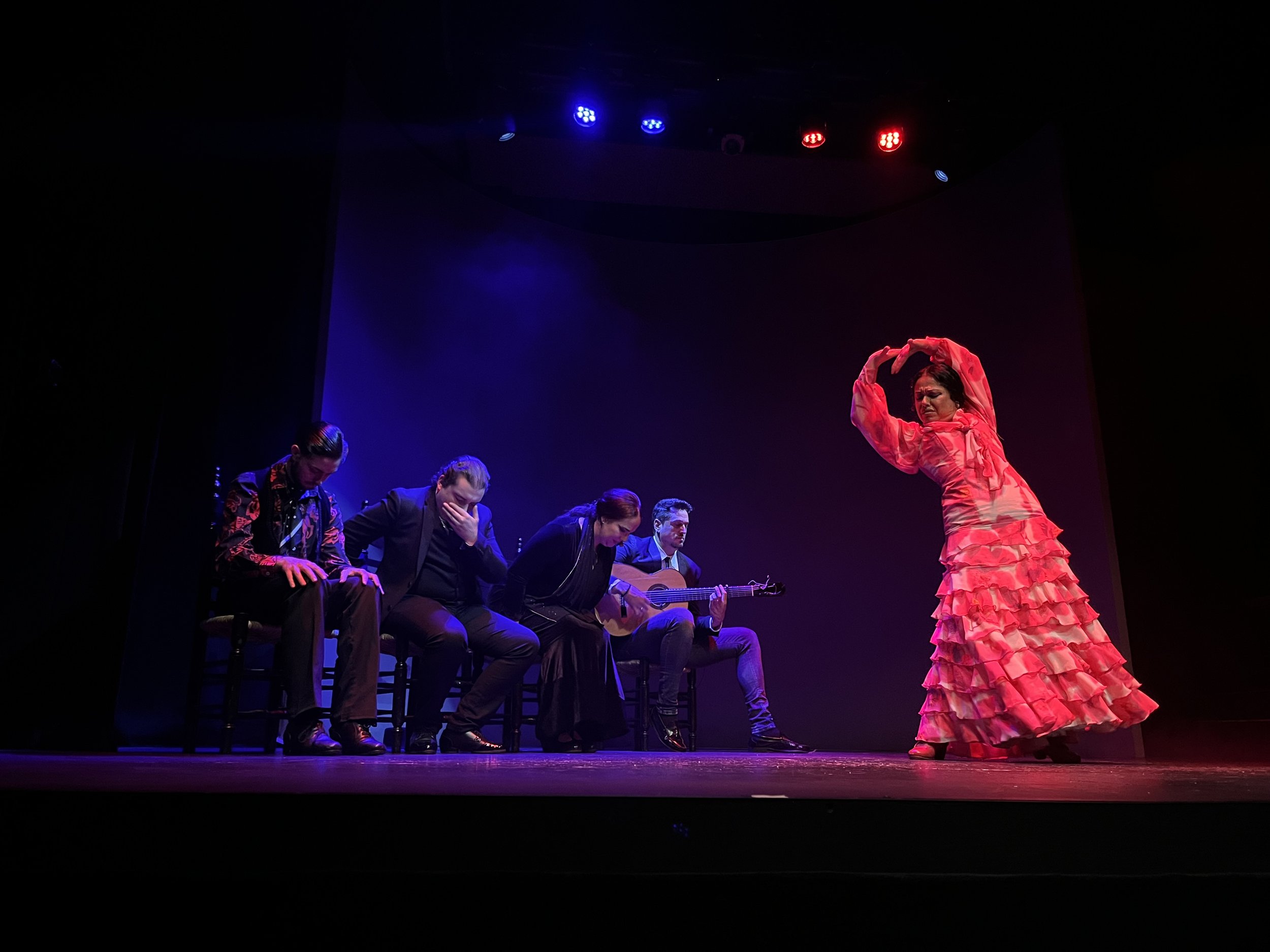
A photo I took during the flamenco show in Granada.
By the mesmerizing footwork of the dance movements and elusive clapping rhythms, repetitive sounds of a percussion groove combined with poetic visuals, by the long-durational enacting of alienating and quite disgusting behaviors, or by expressing the raw emotions of anguish through playing the accordion in such a way it sounds like it’s being ripped apart. Something is asked of the audience in performances like this. What they are presented with, is a beauty beyond the mere pretty - and it pushes them across a threshold into a space where they have access to a reality slightly different from the one they were coming from.
Liminality, derived from the Latin limen (threshold), describes the ambiguous, in-between state that follows crossing a threshold. A threshold is a boundary between physical, psychological or spiritual sates. Once crossed, you enter a state characterized by disorientation, uncertainty, and potential for profound transformation. In Jungian psychology, this space is where meaning, destiny, and collective healing can be found… but only if you are willing to endure the discomfort of the unknown.
This observation proves for me the direct connection between the artist, and the shaman or magical practitioner. Magic being a practice where through various ritualistic acts, a liminal space is created. A place where the mysterious is invited, and through that the conscious is altered from it’s “everyday” survival state, as to facilitate a chance to connect or even enter an Other World.
After their concert, I talked to Merima Ključo (who happens to be my very dear accordion teacher) and contra-alto Jelena Milušić, who together form the duo called Lume. Merima explained to me their setlist is constructed very consciously: it starts with the more standard and “easy going” pieces of music. Via comfort, and the adjacent (and to some probably equally comfortable) melancholy, gradually the audience is guided to a place where they can present them with something unusual, visceral and “unknown”. A way of playing the music that is maybe challenging, disorientating, and possibly transformational.
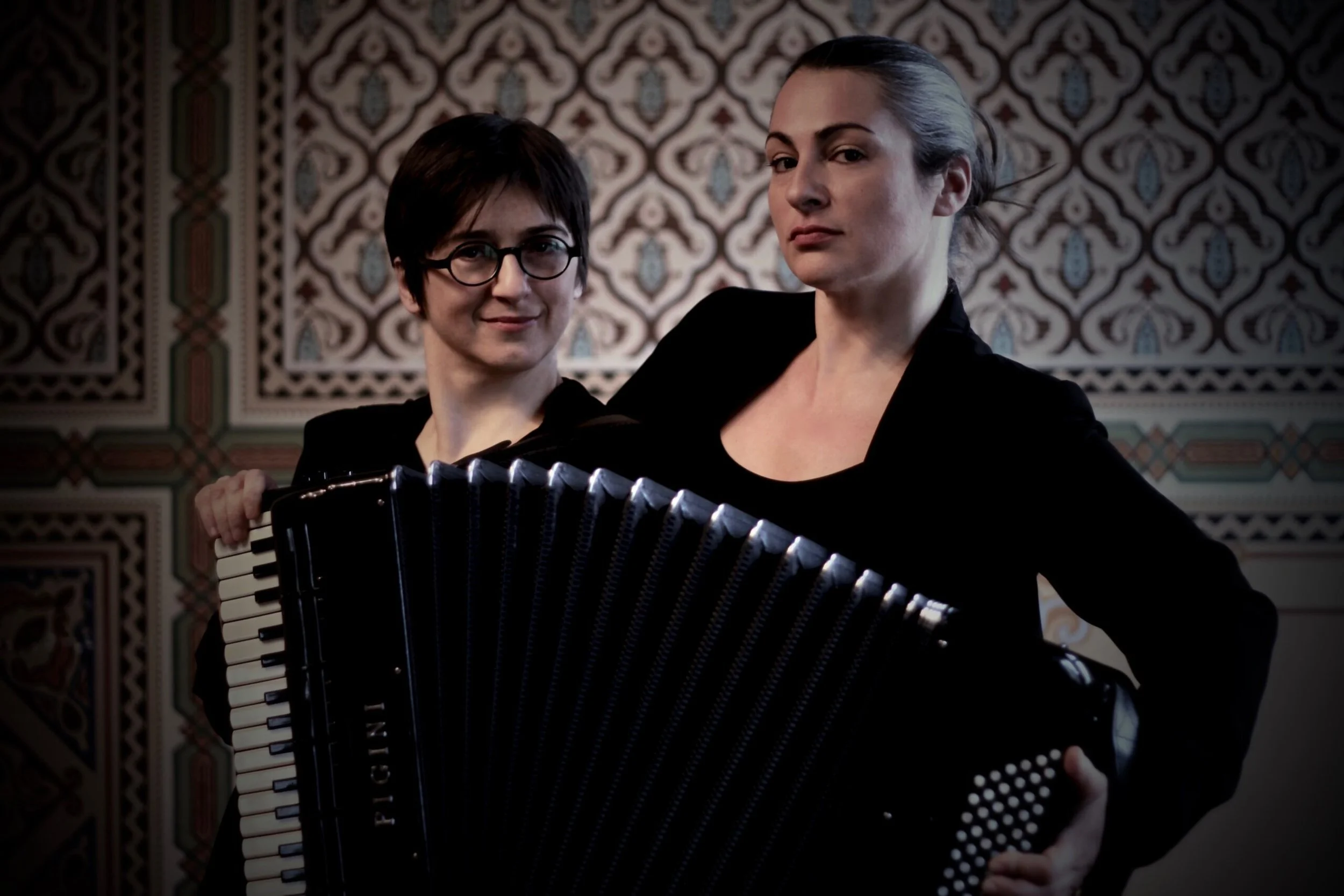
Merima and Jelena - promo photo by Miki-Olabarri-Powell
Here, the accordion was first brought to a whisper.. but then bashed and jerked, melodies transformed into swirling snakes of sound, and Jelena’s voice was used to shock, wail, or sound out of her mind mad. The success of this method could be easily sensed by the sound of the coughs (very present in the beginning of the concert) and the absolute silence and attention that was generated a few songs in. At the end of the concert, the audience were practically eating from their hands.
As a producer, I am of course already contemplating how this translates to the format of recorded music…